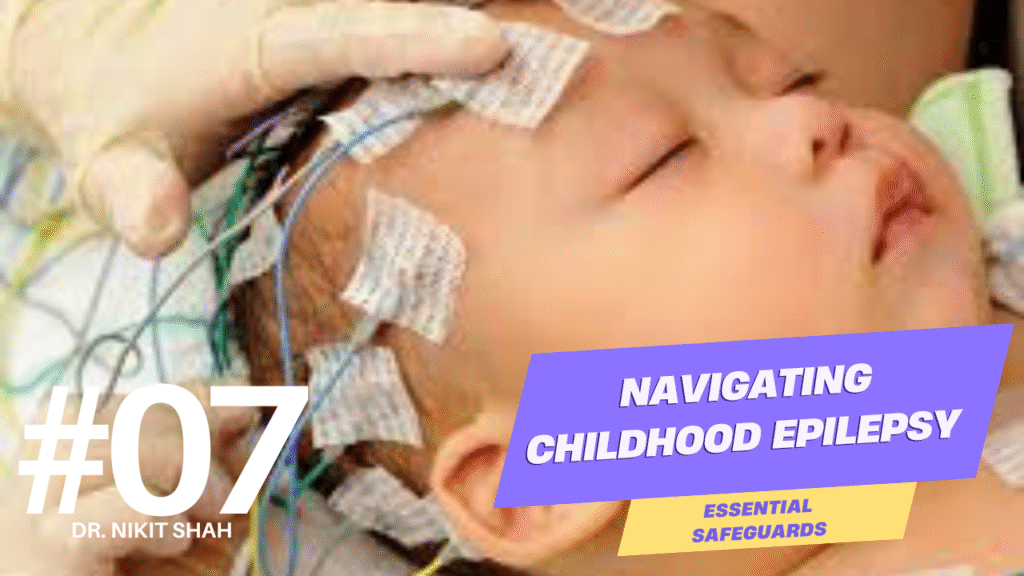
This is the most common question which is asked to Pediatric neurologists when a child is diagnosed with epilepsy. No body wants their children to have another seizure and they want to understand what apart from medical management can be done to prevent re occurance of seizure.
Sleep: Maintaining good sleep pattern and hygiene is the most essential for resonable control of epilepsy. This does not only mean, total duration of sleep. Along with adequate duration, maintainance of good sleep schedule is essential. Certain epilepsies of childhood are very sensitive to sleep hyegine. It is commonly observed that epilepsy which was well controlled, during vacations control is lost. Hence it is important that all children with epilepsy follow good sleep practices.
Sports: Certain sports like skating, swimming (diving), riding bicycle on road should be avoided or done under supervision for 6-8 months of seizure free period. Other regular ground activities, group sports can be allowed as usual. there is no need to restrict daily regular activity.
Schooling: Should be as usual with note to the school. Parents can provide midazolam nasal spray in school (labelled with child’s name) for additional safety. This would ensure that school is empowered to use 1st aid and is involved in care. There is no specific need of additional discounts in terms of academics and sports, unless suggested by pediatric neurologist. A normal child with epilepsy can very well handle mental pressure in his or her own natural capacity.
Food: Banana and certain fruits are commonly defamed of triggering epilepsy. No food is known to trigger epilepsy. It is important to understand that, a child should not be deprived of any food for treating epilepsy.
Handling the mental challanges: Older children and Teenagers with Epilspsy face many mental challanges. Many of them suffer from anxiety, depression, aggression, oppositionality, and difficulties with social interactions, psychosis, social isolation, cognitive impairment etc. It has to be brought to medical attention, so that appropriate medication changes and counselling can be suggested. Majority of the times, counselling is enough to solve the problem, but medical management may be necessary with help of Child psychiatrist.
Driving: Older children with epilepsy should not drive bike or car until they are seizure free for 2 years. This would make them as well as people around them safe.
No products in the cart.