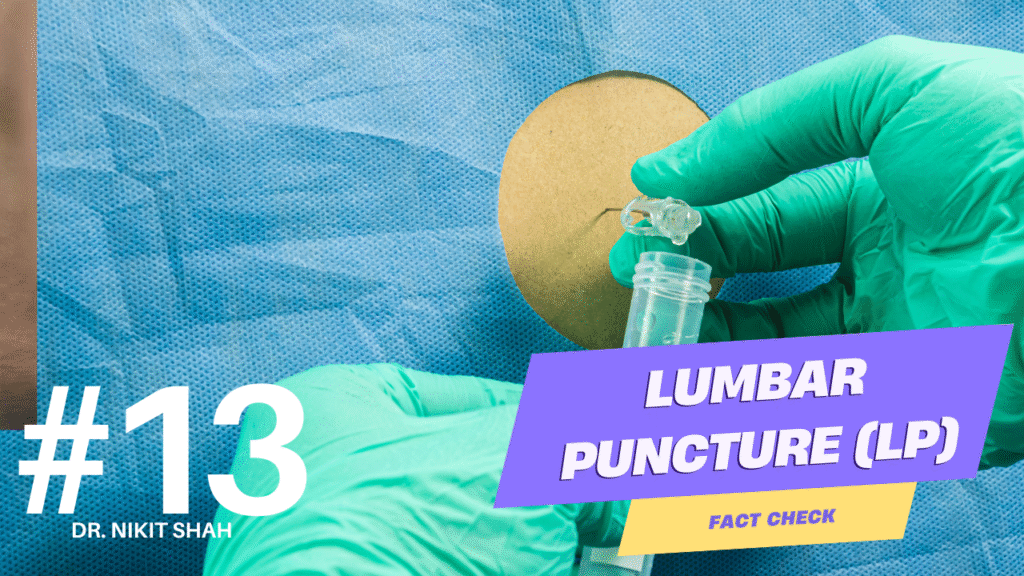
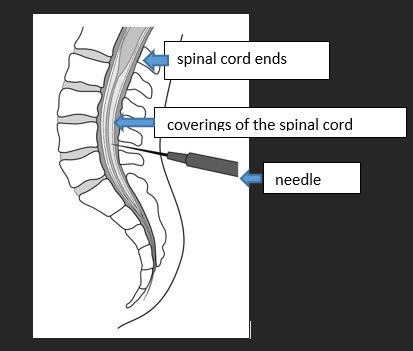
Lumbar puncture is a procedure where we introduce a needle in coverings of spinal cord to collect fluid (CSF). The place at which we perform lumbar puncture is in lower back and spinal cord ends well before site of needle introduction. What continue there are the coverings of spinal cord which contain fluid. This is the same fluid which is produced in brain and circulates around the brain and then it drains down to spinal cord.
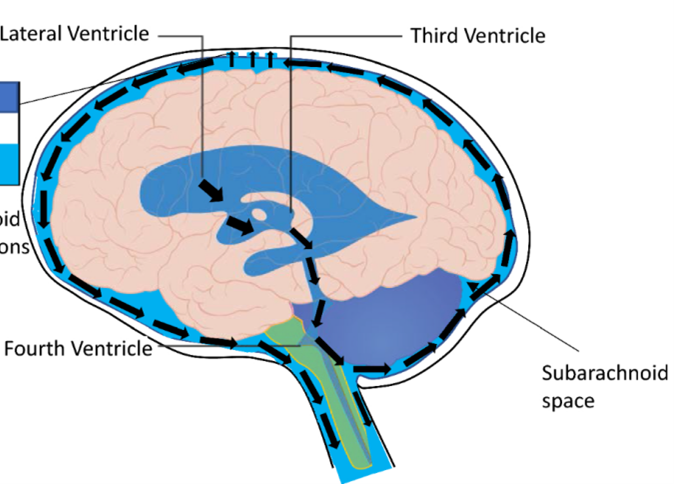
This literally means brain and spinal cord fluid. This Fluid is produced in brain. This, then circulates within brain before entering brain coverings where it gets absorbed. This process of absorption happens through out the coverings of brain and spinal cord. CSF has various functions. Important functions are providing nutrition and act as shock absorbent for brain. CSF is produced and absorbed 3 times in 24 hours.
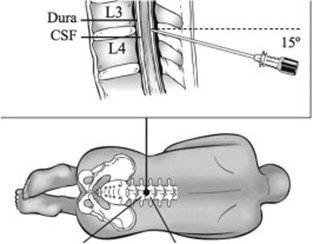
Patient is asked to bring his knees and head closer to chest if he is lying down or simply asked to bend forward if in sitting position. This maneuver increases space between 2 vertebral bodies creating space for introducing needle. In infants toddlers and neonates a second person bends them forward for achieving the same position. A needle is introduced in the space between 2 vertebrae (Called ‘Manka’ in Marathi) in lower back. Nowhere during this procedure a bone is touched. What is pierced is the muscle layer between 2 bones. Then needle travels to the CSF covering through which we collect approx 5-7 ml of fluid following which the needle is taken out. The space created by needle gets sealed automatically. Usually the chance of bleeding are exceptionally low during procedure. In younger children we use sedatives to keep child calm and achieve pain relief. Older children are given local anesthesia only.
Usually the fluid collected will give us information about various conditions. As blood test gives information about various conditions in body, this fluid will tell us about many diseases of brain and spine.
Common indications to perform a lumbar puncture are:
To understand about brain infections like meningitis or encephalitis
To understand about demyelinating brain disorders
To understand inflammatory brain disorders
To assess response to treatment in case of brain infection
Rare indications to perform a lumbar puncture are:
To understand about metabolic conditions of brain
To understand about neurotransmitter disorders of brain
Lumbar puncture for drug delivery:
Lumbar puncture is often done to give medications directly in spinal fluid which reach brain and spinal cord directly like, cancer medications, anesthetic medications and certain other rarely used medicines.
Lumbar puncture is one of the safest procedure if it is done in carefully selected patient.
Common side effects:
Less common side effects:
It is a fairly common complication of lumbar puncture. It tends to happen often in older children and adults. The reason is the CSF leak through the puncture area. This causes negative pressure in the brain and stretches the meninges (Brain coverings) leading to pain. Treatment to this remains conservative. This usually subsides within 2-3 days but can last up to 2 weeks.
Steps to prevent:
(We suggest patients not to sit for longer time, not to ambulate frequently and not to
use pillow, for 24-48 hours post lumbar puncture)
Treatment of post lumbar puncture headache:
Lesser number of attempts are equivalent to lesser complications.
No products in the cart.